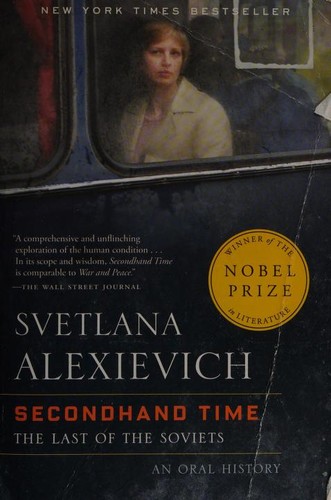
I put off reading this for almost two years because “six hundred pages of interview transcripts about the fall of the Soviet Union” is not, on paper, a pitch that grabs me on a Tuesday night. I was wrong to wait. Alexievich barely writes a word of her own here, she just points a recorder at people, a widow, a former true believer, a teenager who watched her father come home broken, and lets them talk until they stop, and somehow that adds up to the most vivid history I’ve read in years.
What I wasn’t ready for is how many of these voices, people who lived through the gulags and the shortages and the informers, still talk about missing it. Not the terror, they’re clear-eyed about that part, but the sense that everyone was in it together, that the failure was collective instead of personal. One woman in the book flatly says she’d go back to standing in bread lines if it meant her country still made sense to her, and I read that line probably four times before I could move on. That’s the whole argument of the book, really, laid out sideways rather than stated, that a person can hate a system and still mourn its coherence once it’s gone.
It’s not an easy read, and I don’t think it wants to be one. The chapters don’t build toward a thesis so much as accumulate, monologue after monologue, until you start noticing the same handful of grief-shapes recurring under different names, and that repetition is doing real work, it’s showing you a whole generation grieving the same collapse in slightly different accents. I went in expecting a history book and came out with something closer to a chorus. Five stars, and one I’ll be pushing on people for a long time, though I’d budget more than a week for it, this one asks you to sit with it.