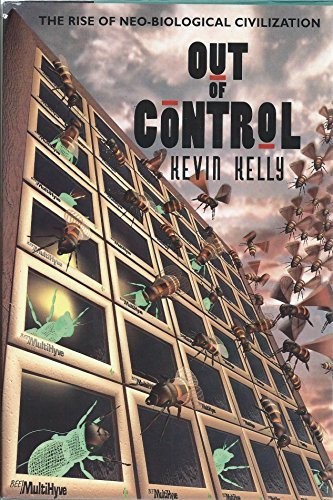
Kevin Kelly wrote this in the mid-nineties, before most of the technology it predicts was anything more than a research paper, and reading it now is a strange double experience, half the specific examples feel quaintly of their moment, and half the underlying argument reads like it was written last year. The core idea, that complex systems, beehives, economies, distributed networks, autonomous machines, all share the same handful of organizing principles, and that letting go of centralized control is often what makes a system robust rather than fragile, still holds up as a genuinely useful lens.
The chapter on hive behavior did the most work on me, reframing a beehive from “a bunch of dumb drones following instinct” into something closer to a single distributed intelligence, no individual bee holding the plan, the plan emerging anyway. Kelly then walks that same idea through human crowds, market economies, and early distributed computing, and while some of the “cutting edge” technology namechecked along the way is now a museum piece, the shape of the argument, that agency can emerge from organization rather than being imposed from above, aged better than the examples carrying it.
Written by a journalist rather than a scientist, and it shows in places, a few generalizations land closer to a TED talk than a rigorous claim, and the chapters can feel loosely strung together rather than building one continuous case. I put it down for a stretch in the middle and almost didn’t pick it back up, which I regret, because the back half rewards the patience. Four stars, dated in its specifics, prescient in its bones.